3 hr
Florence: Horseback Riding & Tuscan Wine Tasting with Transfers
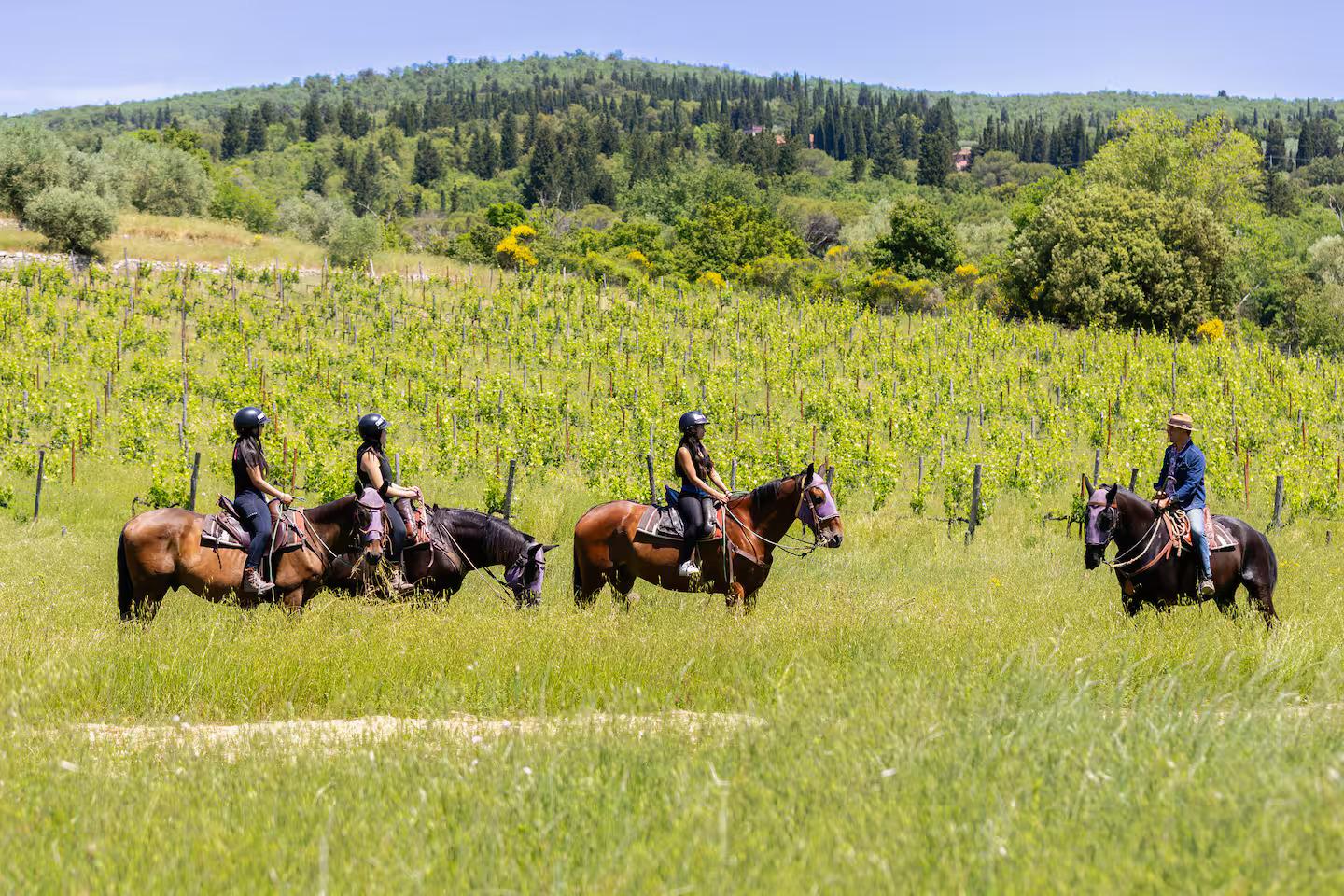
Escape Florence for 3 hours of countryside riding, vineyard trails, and award-winning wine at a historic Tuscan estate.
Reserve
Hand-picked by our editors — only the best 5 experiences from 40 reviewed.
Verified partners for every tour, free cancellation where available, and instant confirmation on every booking.
3 hr
Escape Florence for 3 hours of countryside riding, vineyard trails, and award-winning wine at a historic Tuscan estate.
Reserve
1 hr
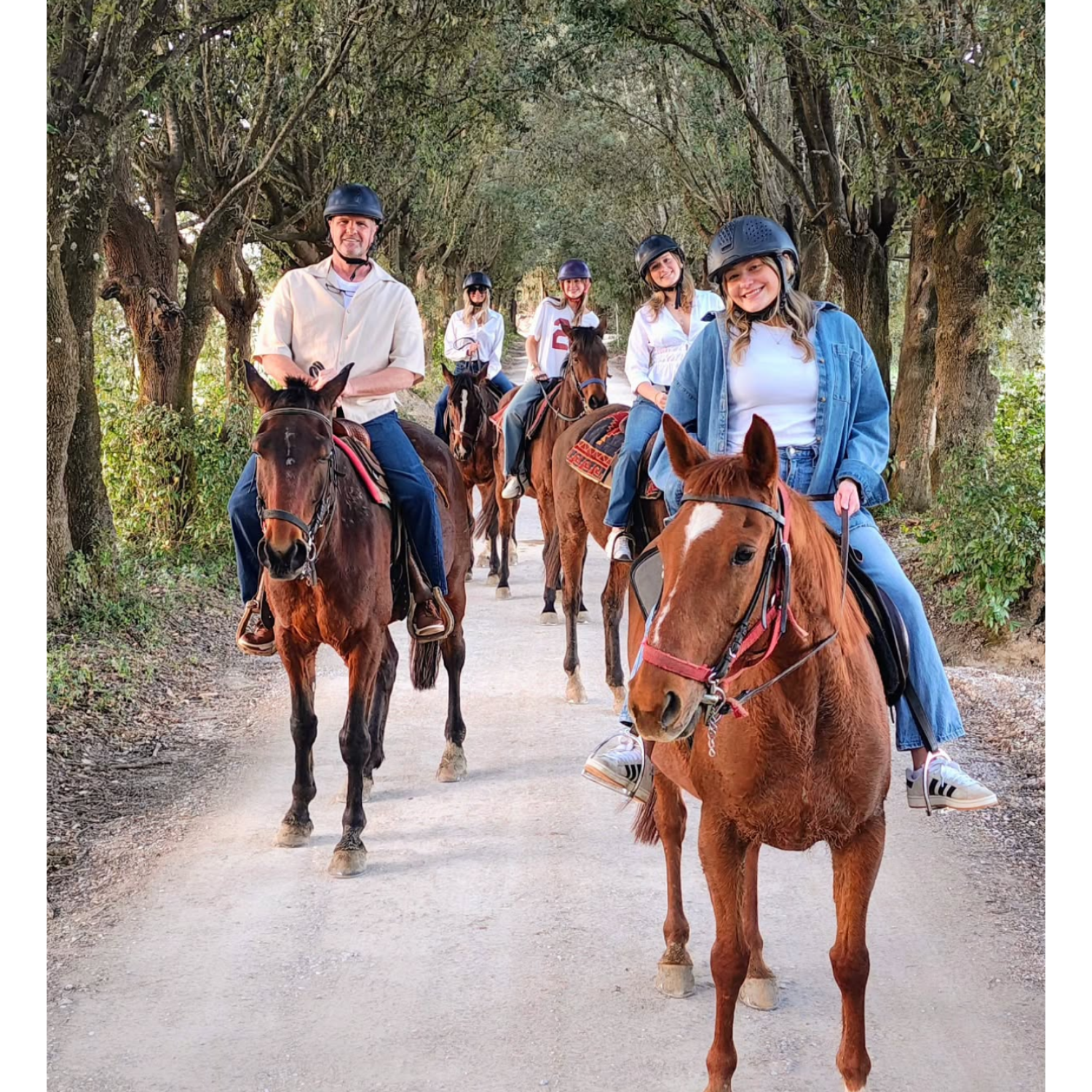
Saddle up for a 1-hour guided ride through cypress avenues, vineyards, and river trails in the heart of Tuscany.
Reserve
4 hr 30 min
Ride into Tuscany's legendary wine country and taste 6 wines across two acclaimed estates.
ReservePrices from verified partners. Availability updates in real time at checkout. Free cancellation policies apply where shown.
The landmarks, rooms, and views travelers on this tour remember — all visible on a single visit.
Traverse miles of private paths winding through historic Sangiovese vines.
Explore the aging process where local Chianti Classico matures in oak.
Ride through groves that have defined the Tuscan landscape for centuries.
Learn about the traditional care and training of local horse breeds.
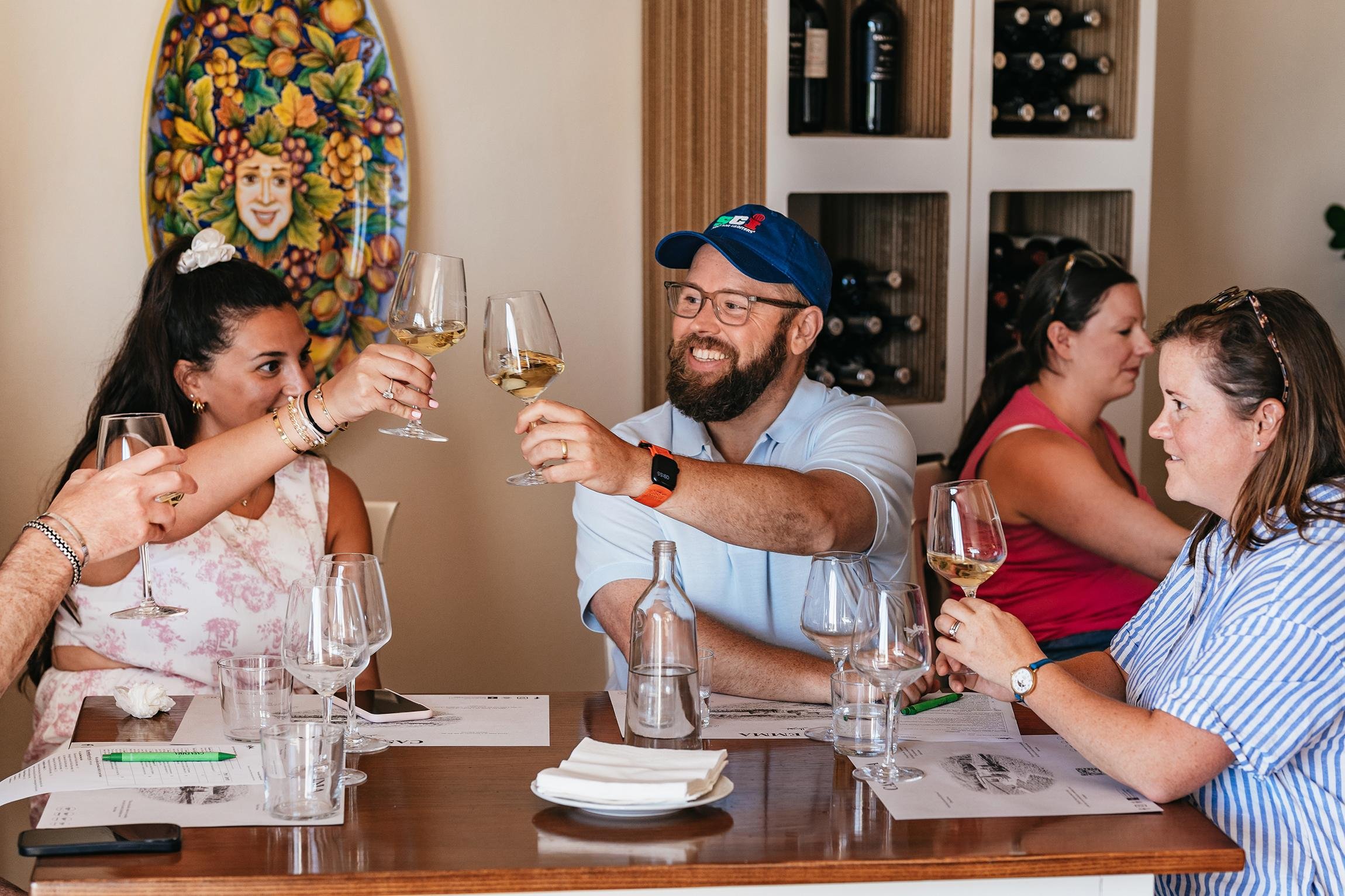
Enjoy the reward of regional wine following your equestrian excursion.
They complement each other; most visitors who do both find the equestrian experience offers a superior connection to the terroir, while motor-coaches provide efficient access to remote regional wineries. Secure your tuscany horseback riding wine tours tickets early to ensure availability during the harvest season.
| Feature | Top pick Equestrian Tours | Motor-Coach Tours |
|---|---|---|
Physical exertion level |
Moderate activity required | Sedentary comfort |
Accessibility to vineyard terrain |
Direct off-road path access | Road-accessible estates only |
Depth of connection to landscape |
High sensory immersion | Observation through glass |
Social environment |
Small intimate groups | Large communal travel groups |
Pacing of vineyard visits |
Slow rhythmic exploration | Structured rapid transit |
| See tickets → |
Verdict: Choose the tuscany horseback riding wine tours tour if you seek an active, slow-paced exploration of Chianti, or select the motor-coach option for broader coverage of Tuscany landmarks.
Choose your ticket, select your date, and reserve in under two minutes. Secure checkout handled by our verified partner.
Instant confirmation by email, with a mobile voucher you can save offline. No printing, no queuing at a collection desk.
Arrive at the entrance, show your voucher on your phone, and walk in. Most tickets include priority or skip-the-line access.
Practical details for your visit straight from our verified partners — hours, access, rules, and how to get there.
Varies by operator
Confirm address upon booking confirmation
Recommended as public transport is limited in rural Chianti and Siena.
Private transport is required from major train stations to rural stables.
Long trousers and sturdy, closed-toe footwear are mandatory for safety in the stirrups. Wearing layers is recommended for changing temperatures throughout the day during tuscany horseback riding wine tours.
Only small, secure cross-body bags are recommended while riding to maintain balance. Large backpacks or loose items are prohibited for the comfort of the horses.
Photography is permitted during breaks and at the vineyard stops. Riders must prioritize horse control over capturing photos during active travel on these tuscany horseback riding wine tours.
These experiences require moderate physical fitness and the ability to mount a horse independently. Guests with mobility concerns should communicate requirements to the specific operator before booking tuscany horseback riding wine tours.
Minimum age requirements are often set between 8 and 12 years old depending on the horse breed and trail difficulty. Families should confirm insurance coverage for younger riders on tuscany horseback riding wine tours tours.
Most packages include wine tasting and light refreshments or lunch at local estates. Bringing a personal water bottle is advised for the duration of the tuscany horseback riding wine tours tour.
Best time to go, insider tips, nearby landmarks, and the cancellation fine print — flip through to skim what matters to you.
How crowds, weather, and events shift across the year.
Mild temperatures between 15°C and 20°C with lush green landscapes.
Warm days require 09:00–10:30 arrivals to avoid peak heat during tuscany horseback riding wine tours.
Harvest season offers vibrant foliage and cool, comfortable riding weather.
Limited operations due to colder temperatures and muddy trail conditions.
Small details that turn a good visit into a great one.
Confirm your tuscany horseback riding wine tours tickets 24 hours in advance.
Apply sunscreen before the ride as shade is limited in the open vineyards.
Plan your arrival between 09:00–10:30 to utilize the best riding weather.
Check specific operator weight restrictions prior to finalizing your booking.
Learn basic Italian phrases to enhance interactions at the family-run vineyards.
Non-bookable sights within a short walk — free to visit, easy to pair.
Historic site in Siena known for the Palio horse race.
Outdoor gallery featuring contemporary art installations in a forest.
Gothic cathedral famous for its marble floors and architecture.
Medieval walled village located on the Via Francigena.
Flexible, no hidden fees.
Most operators allow free cancellations up to 24-48 hours before the scheduled departure. As there is a 0 EUR public access fee, refunds apply strictly to the private package prices paid at booking.
Hand-picked options within walking distance — pick a district for vibe, or a specific hotel for convenience.
Authentic rustic lodging located directly on vineyard estates.
Upscale historical villa offering refined regional hospitality.
Central hub with diverse hotel options near transit.
The Sangiovese grape that fills nearly every glass poured on these rides was documented in Tuscan agricultural records more than four centuries before Chianti Classico received its Black Rooster seal in 1924. That long continuity explains the landscape a rider crosses today. The hills between Florence and Siena were shaped by the mezzadria sharecropping system, which held until the 1960s and left behind a mosaic of small parcels: vines on the sunniest slopes, olives on the thinner soil, oak and holm-oak woodland on the ridgelines. Horses were working animals here long before they were leisure ones, moving between podere farmhouses along tracks too narrow and too steep for carts. Those same tracks, the strade bianche, are the reason tuscany horseback riding wine tours exist in their current form. Unpaved and dust-white, they thread through estates in the Chianti Classico zone and south into the Crete Senesi, where clay ridges give way to the vineyards of Montepulciano. A saddle sits at roughly the height of a vine row, which is a detail with consequences: the rider reads the terraced planting, the cover crops sown between rows, the pruning system — often the cordone speronato favoured across the region — at the scale it was designed to be seen. The cellars at the end of these routes matter as much as the route. Chianti Classico requires a minimum of 80 percent Sangiovese; Vino Nobile di Montepulciano is built on the Prugnolo Gentile clone of the same grape and ages a minimum of two years. Many of the estates receiving riders are working farms rather than showrooms, with barrel rooms cut into hillsides and tasting tables set under pergolas. The pairing of horse and cellar is not a marketing invention but a survival strategy: agriturismo law, introduced in Italy in 1985, allowed farms to diversify into hospitality without abandoning agriculture, and stables were among the first things rebuilt. What a Chianti countryside horseback tour preserves, then, is a working relationship between animal, vine, and hill. UNESCO inscribed the nearby Val d'Orcia in 2004 for precisely this reason — a landscape composed, not merely inherited. Access to the countryside itself carries no public entrance fee of 0 EUR; individual operators set their own package prices. The best tuscany horseback riding wine tours tours are those that keep the pace of the medieval track rather than the schedule of the motorway.
"A saddle sits at roughly the height of a vine row, which is a detail with consequences."
A step-by-step walkthrough of the visit — what you'll see, how long each stage takes, and the details that matter.
You arrive at the stable between 09:00 and 10:30, before the heat settles into the valley and while the horses are still cool. Someone matches you to a mount by height and experience, adjusts your stirrups, and runs through the basics in the yard: reins low, heels down, keep one horse-length behind the rider ahead. If you booked the Florence departure with transfers, a van has already collected you and delivered you to the gate. The first stretch is a walk along a strada bianca. You pass vine rows planted close enough to touch, then a stand of holm oak where the temperature drops several degrees. Your guide stops at a ridge, points out the bell tower of the nearest village, and lets the horses breathe. On the Montepulciano ride you continue past a working farm — chickens, an olive press, a dog that follows for a while. You dismount at the estate, hand over the reins, and walk stiffly to a shaded table. Three or four glasses appear, poured in order, alongside pecorino and bread with local oil. Someone explains the barrel room below. A tuscany horseback riding wine tours tour usually ends here, unhurried, with the horses grazing in view and your transfer waiting past the cypress line.
The operators are generally available from 09:00–18:00 daily.
There is 0 EUR public access fee, as private tour operators set individual package prices for these experiences.
For the best experience, arrive between 09:00–10:30 to enjoy cooler riding conditions before the midday heat.
Most operators provide horses suitable for beginners, though basic safety instruction is always included.
Participants should wear long trousers and closed-toe footwear for safety and comfort.
Light refreshments or lunch are typically provided as part of the package, so personal food is generally not required.
Photography is encouraged during breaks, but safety remains the priority while the horse is in motion.
Many operators allow children; check individual age requirements when booking your tuscany horseback riding wine tours tickets.
Private car or taxi is recommended as public transport to rural stables in Tuscany is limited.